
TRX250r.org

Show Posts

This section allows you to view all posts made by this member. Note that you can only see posts made in areas you currently have access to.


Messages - SmartCarb

Pages: [1] 2
1
Quote from: Fire1;47271
Cory when will the next round of cast carbs be available ?


Tim, I have been waiting to answer hoping to give my best information. We have solicited numerous vendors and have narrowed down the quotes and will selecting a new casting vendor in the next few days. Trusting the result will be higher quality castings in much higher volumes. We will resume cast SmartCarb production within six weeks of the selected shop taking our work. The process involves checking the quality and this time creating tooling for the 36 and 40mm sizes in addition to the existing 38 mm castings. We will announce our expanded production as soon as it begins, including a release date for the 36 & 40 mm sizes.


2
Quote from: rablack21;47114
Tony, the 2nd smartcarb came with too lean of a needle for that engine setup due to an error by Tom not recording information about this engine being heavily modified from stock, right? It normally would have come with a richer needle if he had recorded the correct information, right?

OK let's do a little review so we can all understand what is happening here and avoid any more costly mistakes. Tony was given a loaner carb to try, after installing it had a sticky float issue. He started calling our tech service line, where he was advised how to handle the float issue and some basic tuning tips. From there a persistent mid range stumble showed up and we started chasing things around to determine the cause. My guess is our service technician was guiding him through proper float bowl settings thinking we had a capacity or fill rate issue. None of that worked so we likely went on to metering rod selection and started stepping up richer. All this by the way working with a non alpha customer using a borrowed SC and supplying parts to help Tony get his modified engine dialed. We love you guys. Anyway it was finally discovered that the carburetor was indeed hard rubbing (inside the intake boot) and likely the issue all along. Some pictures were posted and the plug showed a nice light tan and apparently at or near a perfect burn which we are all used to seeing with an SC. The piston on the other hand is not happy at all and shows localized over-heating, yielding of the exhaust edge and chunking off.

It's clear the carb touching the intake caused the fuel to turn to a highly aerated froth along some frequency (mid range) causing the carburetor to deliver pre-aerated mixture to the engine at those points and burned the piston. Alright, in the meantime another carburetor is ordered but nothing I have is specifying this is going onto this same engine we spent a couple months trying to dial in and had a reasonable expectation of what metering rod it should come with. This is clearly our fault for not requesting enough information. Notwithstanding on the other end, had I the earlier carburetor and several metering rod variants in my hand, a brand new bored, ported custom engine needing broken in and several months of plug readings. Intuition would have led me to the richest rod I had already been running.  I am reasonably certain from looking at your plug the .074 MR is very close to what you will need with this engine. The .080 MR, which is our standard issue for 300 class stock to lightly modified dirt bikes will not work and your piston has brought that to your attention.  When we receive your original carb back  we can validate these things and make sure we are correct. The new 40 SC you have will require the richer rod for best performance and to protect your engine. Sand of course is the hardest loads there are and any engine will want more fuel under these conditions.

3
Fuel/Oil/Coolant / APT Smart Carb: History, Design, and Tuning Tips
« on: December 01, 2014, 12:28:31 PM »
Quote from: fearlessfred;46874
I got to ask are there any gains in horsepower or torque to be had with this carb,or is it the ease of tuning it that attract people to buying it.Maybe I'm just to old ,but I don't get it

Jetless,  two external adjustments.
Superior atomization.
Automatic altitude compensating.
Typical 10%+gains in HP-8%+ gains in torque.
Typical 30%+ gains in fuel economy. (2ts)
50% reduction in HC and particulate emissions. (2ts)
Linear throttling with no circuit overlap.
Multi fuel capability- pump fuel, racing gasoline, alcohol, Nitro, #2 diesel, Jet-A, and military spec JP-5 and JP-8.

4
Fuel/Oil/Coolant / APT Smart Carb: History, Design, and Tuning Tips
« on: December 01, 2014, 12:01:19 PM »
Quote from: fearlessfred;46881
Thanks tony, no offence to anyone but it makes me think of Cannondale and the fact that they could have been successful with one more year of testing before releasing to the public. I bought a Cannondale but I don't think I will own one of these.

I'm not sure your measure of success. Less than 5% of a little over 1000 units (billets and cast combined) have or are having any issues. Some have been in the field for over 5 years and those report they just keep getting better. Forums were made for discussing issues, but if you were to look at the really large forum threads, like KTMTalk and GasGas you'll easily find more positive reports than negative, and most of those problems were related to issues with the bike or improper tuning. No were not perfect,  but as more and more product gets out there and bikes start showing up from the factory with an SC folks will get a better idea of what this is really all about.

5
Fuel/Oil/Coolant / APT Smart Carb: History, Design, and Tuning Tips
« on: December 01, 2014, 11:50:42 AM »
Quote from: Jerry Hall;46864
Where are you obtaining your O2 samples in the bike in the video? Are you collecting your sample after it discharges from the muffler, using a sniffer tube inserted through the muffler or through a hole drilled somewhere in the expansion chamber or do you have the O2 sensor sampling directly from a welded in bung somewhere in the expansion chamber?

Samping directly from a welded bung about 10" from the piston.

We use different size needle/seats for gravity fed or pumps. Typically 3.5 for gravity and 1.5 for pumps.

6
Fuel/Oil/Coolant / APT Smart Carb: History, Design, and Tuning Tips
« on: December 01, 2014, 11:40:34 AM »
Quote from: Pumashine;46846
In the video the measurement of the top of the slide to the bottom of the FMR is supposed to be 3.855". When checking the new 40mm billet I just received the measurement is 3.955". Is this .100" discrepancy a error is my new carb set wrong? This is set to about 85 clicks from rich from APT. But is real close to the 3.980" I was at when the meltdown occurred on thew 431 puma.

Tony,

3.855" is a fairly typical number for the Cast 38mm's and where this particular Cast 38 (w/ Q-11 .080 MR) in the video was set when it was first run in.

I have  Q-11 @ 3.950" written down on my sheet for your recent 40mm. I hope we were clear on your information when you ordered this carb, any and all specifics you can give us when ordering help us to get something to you that is very close. I didn't see anything specific to a mod on this build sheet, is why I ask, and likely a Q-11 MR would not be correct. My cell number is in the video but for quick reference: 307-761-1251. Please call me.

7
Quote from: Pumashine;46779
The flange of the SC was touching the RAD valve from 6 to 10 o'clock as marked in black sharpie in the picture. There is a sharp burr there where the aluminum was push back into the SC bore.

Are you saying I should pull the Allen bolt that holds the needle/seat in there to look at it or just check for flooding before hooking the carb the the motor?

Easier to just gently pull the wire bail from around the needle and slip the needle out. Look carefully with a magnifying glass at the tapered end of the needle for a heavy ring where the needle has been seating/impacting the seat, then check the spring plunger on the top of the needle for return tension. If all good, take a pen light and look down into the brass seat, the edge leading into the inlet where the needle rests should be reasonably sharp without a large chamfer, look for rotational type impacting or hard wearing. There should be little to no ring on the needle, brass smearing or galling down in the seat. If there is I would recommend replacing it. The frequency being transfered into the little parts and pieces at 8-9000 rpm is severe.

And of course cut and file the burr out of the venturi, then I would flat sand the end of the venturi, even at the angle it is worn, won't hurt it. You can do this on a piece of plate glass and a sheet of 220 grit sandpaper.

8
Quote from: toydoc;46654
Bruce did spin out back then. Went through a divorce, then a group remade Scorpion brand snowmobiles and ordered ALL the production motors from Bruce and didn't pay or went belly up. Sad deal. Last I knew he out in Utah playing with mountain sled heads.

Odd thing about patents, they don't stop anyone from using it. It just gives you the right to take them to court and fight

It's all true unfortunately and a shame.

Scorpion never had a chance though. Can you say Cannondale? Too much too soon, the Genesis engines were a work of art though and I had an 890 that is still racing today. PSI is in a small building near Ogden Utah. I didn't want to fight with Bruce, as I highly respect the man and knew of him when he worked for Aaen, we were hoping they would just play ball and we all sell better carburetors. Understandably I think he is pretty embittered by his loss, you may recall they had just built a huge facility in Wild Rose Wisconsin before it all went down.

9
Quote from: rsss396;46484
Haha yeah don't bring up the TSS word lol
Well it's all about suppliers right? Same BS we go through every day, we can do your work-meet your tolerances etc. End of the day...no.

10
Quote from: rsss396;46481
Wobbly's a sharp guy and hard headed, it would not surprise me if he did not drill yor carb and put a power jet in it.
He use the same trick some of the factories use by switching off the electric power jet in the overrev to build heat in the pipe for more rpms
Oh for sure, he's pissed at me because I couldn't deliver a bunch of carbs to him. I made reference to TSS and the experience was similar and holy hell the romance was over. So he may have out of spite. Ha! No he's brilliant, but I'm thinking he's not the first if he's tried. Had a couple blokes from New South Wales call in to order a bunch of new parts for 3 billet 38s they had fixed....

11
Quote from: rsss396;46474
Wobbly posts on many forums but the forum I refrenced from is a private engine builder forum. I will try to gather his latest thoughts since this was made in August 2014
I'll call him. Appreciate your making reference to it and interested to see what he was thinking.

12
Quote from: rsss396;46460
I will say I do like the oviform shape of the SmartCarb and also the old PSI BigAir carb, this should work especially well at smaller throttle openings and never understood why the other carb manufacturers did not use it.

Kawasaki used a keyhole shaped carb back in the 70s and there have been several variations over the years. Lots of aftermarketeers have offered offset bore carburetors. Today we have this shape patented and the predictive technique used to design it. PSI actually was infringing on our patents a year after they saw an SC at the hillclimb in Jackson. So as gentlemen we offered Bruce Kahlhammer a licensing arrangement to continue selling the V shaped venturi they had started using, (not the early D shaped big air they have patents for) however after some rude discourse we ultimately had to serve them with a cease and desist order. Turns out the design they had didn't work all that well and they weren't selling enough to really matter. You'll note they had large scallops cut into the venturi to diminish laminar flow and frankly were going in the wrong direction. I'm not sure they are even still in business, which is too bad, they had some pretty cool stuff at one time.

13
Quote from: rsss396;46458
It's strange that you did mention wobbly, because I have only seen him mention the smart carb once and it was in reference to the pikes peak
Quad but he stated that he quit helping with development of it when his request for a adjustable power jet were ignored.

Except Rob Berrington-Smith has been racing with them for two seasons http://m.youtube.com/watch?v=7Ve2Y86dP7U

Jeram on twostrokemotocross forum posted this recently http://twostrokemotocross.com/forum/technical/apt-smart-carb/

Quote
I spoke to Wobbly (Honda NSR500 GP technicial) back in late January.

He had tested the billet SmartCarbs and he said he thinks theyre unreal.

To be clear. Wobbly was not, has not, been helping with the development of the SC, and as far as I have spoken with him, he has never requested a power-jet. We have sent him different metering rods to try over time. Perhaps if you could reference where you heard that would be interesting to know. He built the pipes for the quad in the picture and advised Wilson Performance on the Cheetah cylinders. I sold him the 40's off the quad and a 28mm for his bucket 50cc. The 40s have been running on Wobbly's RZ400 ridden by Rob Berrington-Smith. Wobbly would like to be our distributor down under and I think his only problem with the SmartCarb is getting his hands on as many as he can.

14
Quote from: toydoc;46457
I'll side track the topic a bit, sorry. All of my Mod sled motors make peak HP over 500+ rpm sweep just like mod ATV motors. Plus they are .30 hp per cc. A CVT can't just start at peak HP. Most start at 4500 ~ 5000 RPM then end at 9800 ~ 10,000 RPM. To tune a CVT and WIN takes alot more work then you think. I wouldn't use the word easier in any part of it. Your 60' time is everything and if your waiting to make power, you wont win. IMO it takes running 1.1's in 60' and a peaky motor wont turn that time

Well said. Most find stock to reasonably ported exhaust and longish tuners the answer for clutching nightmares in drag racing. Ski-Doo's TRA clutches also really help to compound torque out of the hole and has answered a lot of problems in stock class racing. Conversely, Polaris and Arctic Cat have the luxury of a compound overdrive but take a lot more finesse to beat a rotax in 660ft. But you'll see them gaining mid track every time. We were desperate enough to keep from pulling the belt in half on our 340 and 440 sno pro rotax's back in the day we made a slipper clutch for the jackshaft so we could leave the line with the clutches and belt already engaged. 6800-12,500 rpm. Worked pretty good until one came apart and did a number on my left foot, finally relented and added 7/8" to the head pipes and 145 deg. rotary plates. Sad though if you've ever heard one at full song, they never sounded the same after that, but were much quicker in 60ft times.

15
Quote from: jcs003;46399
Hi smartcarb.  i am impressed by your technology. however,  can you elaborate on your mentors understanding of laminar flow.  reason i ask is, laminar flow has no place within the intake of an internal combustion engine.  hi velocity and/or turbulent flow is what makes a typical carb atomize the way it does.  is it your way to promote pressurization of the fuel flow that compensates for this?  maybe within my query is the patented info.lol

john

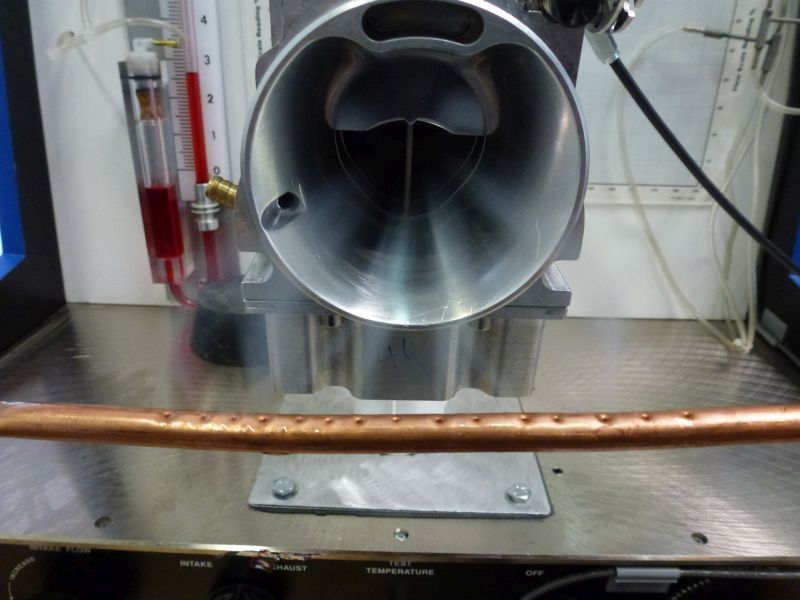
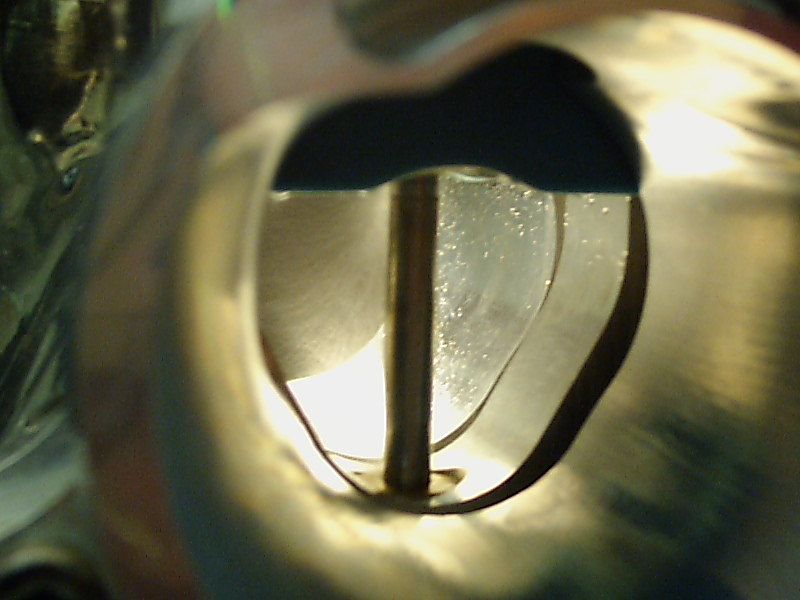
And therein lies the fundamental difference between the SC and every other predecessor. You need to understand Mikuni, Keihin and many others learned a lot of what we take for granted from Mr. Edmonston. He lived the remainder of his life competing against his own technology. Story goes though he's on a jet leaving Detroit shortly after selling Lectron to GM. It was raining with fog, he was watching the leading edge of the wing and of course with vapor we all can see laminar flow form as the airstream straightens itself and accerates over the leading edge and curve of the wing. Same thing with hearding the air into the throat of an SC, and years later we put it into practice. If you look closely you will see a decided curve leading into the venturi, this accelerates, straightens and begins to compress the air and greatly helps our cause to stuff more air through an otherwise fairly constrictive throat. Naturally, with any carburetor true to Bernoulli the idea is to create as high of a compression zone as possible without choking flow and causing stall, thereby increasing flow to maximum velocity and achieve the strongest venturi vacuum you can. Ok we all get that. To answer your question, it has always been understood that you want to create turbulence (mixture motion) along the intake to aid atomization and fuel suspension. This is only true however after the fuel has been introduced into the airstream and some surface roughness (not wall uneveness) helps keep everything mixing.

With the SmartCarb, we promote laminar flow as a means to create very high velocity and compression under the slide so that we can utilize a single fueling circuit. The atomization in an SC is created by the metering rod and not pre-emulsion through a pilot jet at idle and further emulsion though the nozzle at wide open, as it is with a conventional carburetor. In these carburetors any extra turbulence is welcome because they are so poor at atomization. With an SC because the fuel is delivered from the metering rod above the airstream, the fuel is carried as a vapor plume into the engine and doesn't need a lot of assistance to maintain suspension. Great news is this allows you to hog more air through your engine with an SC or run a slightly larger venturi and not suffer the all too easy consequences of flow stall, causing fuel to fall out of suspension. To a certain degree of course this happens in all engines, but the farther you can carry the bulk mix into the combustion chamber, the closer the actual trapped air/fuel ratios are to those as delivered by the carburetor. Then you really begin to narrow the gap with Direct fuel injection and the goal of minimizing fuel consumption is best served. Combine that with Kadenecy effect bulk transfer of the mix in modern two strokes and you see where this is all headed. Move further along with Sonic-Flow Engine tech with variable geometry plumbing and things really begin to look pretty bright and a new lease on uncomplicated 2t's may be coming along.


Pages: [1] 2